Your electricity contract says you are buying renewable energy but your Scope 2 calculation based on the electricity grid tells a different story.
So which figure should you report?
This is one of the areas of Scope 2 emissions reporting that causes the most confusion. The answer is usually not about choosing between location-based and market-based emissions. Under current GHG Protocol guidance, many organisations need to understand and report both.
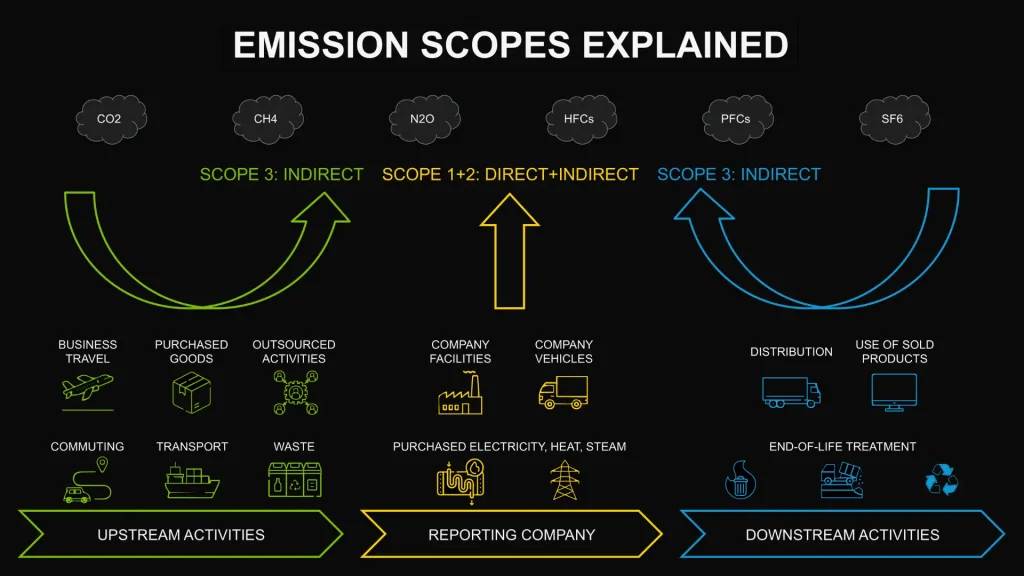
Scope 2 covers indirect emissions associated with purchased or acquired electricity, steam, heat and cooling. If you need to understand how Scope 2 fits alongside direct and value chain emissions, see our guide to Scope 1, Scope 2 and Scope 3 emissions.
The location-based and market-based methods apply to all of these, although the emissions data and contractual instruments available can differ from those used for electricity. Although this article focuses specifically on electricity, where the distinction between location-based and market-based reporting is particularly relevant to renewable electricity purchasing and contractual instruments, you should consider all purchased energy sources when calculating your Scope 2 emissions.
There are two ways of calculating scope 2 electricity emissions:
- The location-based method reflects the average emissions intensity of the electricity grid where energy is consumed.
- The market-based method reflects emissions associated with the electricity products and contractual instruments an organisation has chosen, where these meet the relevant GHG Protocol quality criteria.
If you operate in a market where electricity choice and qualifying contractual instruments are available, the current GHG Protocol Scope 2 Guidance requires you to report both figures.
The two numbers answer different questions, so they should not be added together.
Location-based vs market-based Scope 2 emissions
The difference becomes clearer when you look at what sits behind each calculation.
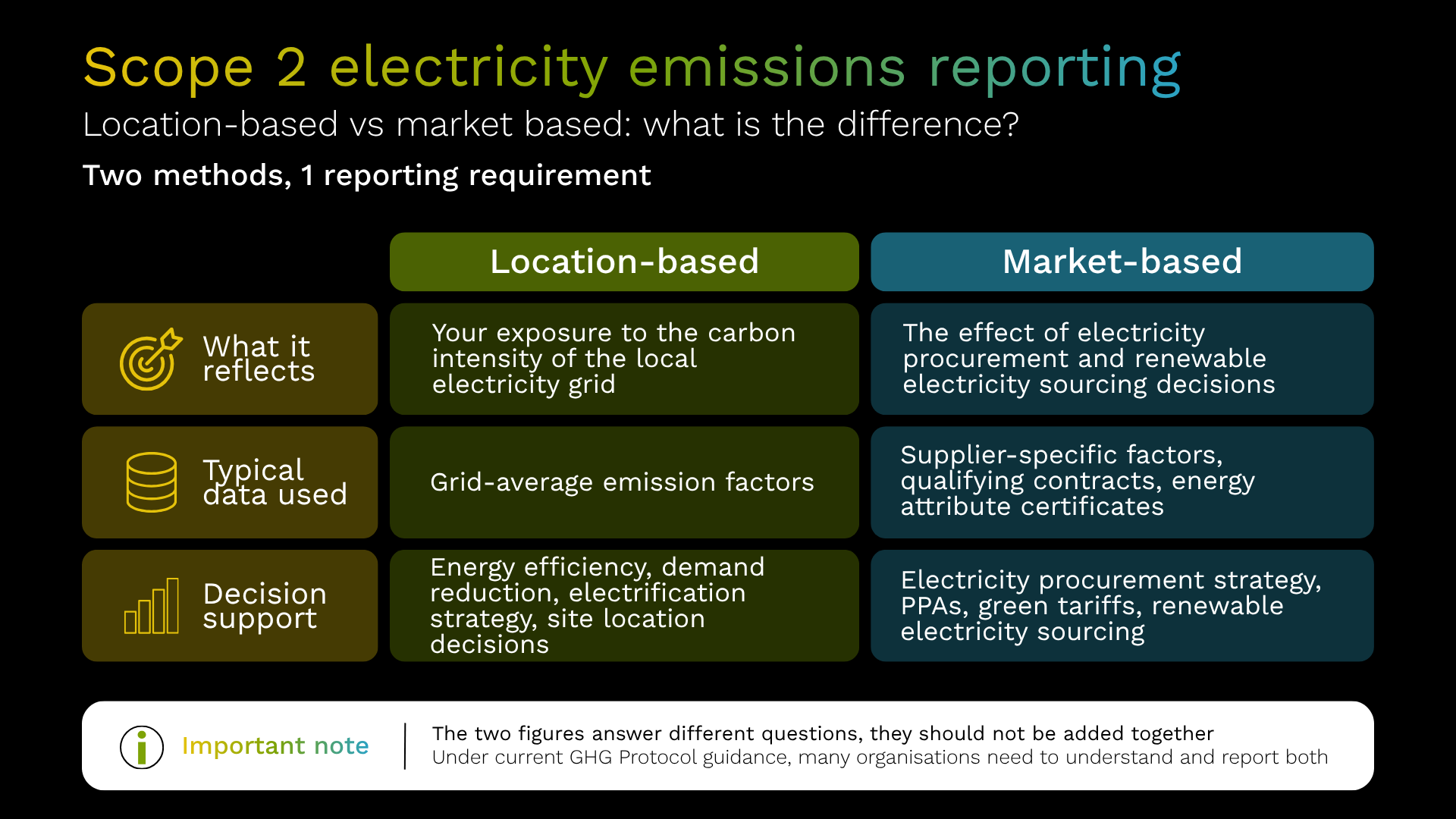
For example, your organisation might operate in an area where grid electricity still has a relatively high carbon intensity while purchasing electricity through a qualifying renewable energy arrangement. Your market-based Scope 2 figure could therefore be substantially lower than your location-based figure. That does not mean one calculation is correct and the other is wrong. They are measuring Scope 2 from two different perspectives.
Why can the two figures be so different?
The location-based calculation follows the electricity system around your site. If it consumes electricity from a carbon-intensive grid, that will be reflected in its location-based emissions. Changes in the grid mix can therefore affect the figure even if you have not changed how you buy electricity.
The market-based calculation looks instead at eligible contractual information associated with the electricity you buy. This may include supplier-specific emission factors or energy attribute certificates, depending on your market and whether the instruments meet the GHG Protocol Quality Criteria.
If you have no qualifying instruments, the market-based method normally uses a residual mix factor where one is available. This reflects the electricity left over once other buyers’ claims have been removed, so it can be higher than the grid average. Where no residual mix factor exists, you would use the grid average and say so in your reporting.This is also why purchasing electricity marketed as renewable does not automatically mean Scope 2 emissions can be reported as zero. The evidence behind the claim matters. With qualifying instruments covering your consumption, a zero market-based figure for that electricity can be legitimate. Without them, it is not.
Which Scope 2 figure should a business report?
Under the current GHG Protocol Scope 2 Guidance, if you operate in markets where qualifying contractual instruments are available generally you should report both a location-based and a market-based Scope 2 total.
Where those market mechanisms are not available, only the location-based figure may apply.
If you use Scope 2 emissions for a reduction target, the GHG Protocol also requires you to make clear whether that target is based on the location-based or market-based result.
The practical question you should ask yourself is therefore: What are you reporting, who is asking for the information and what methodology does that requirement expect?
A corporate carbon footprint, customer request, target or disclosure framework may use Scope 2 data differently. The same applies to external disclosure requirements such as CDP reporting, where the methodology and evidence behind the figure matter.
Start with the requirement, then make sure the calculation and supporting evidence fit it.
What evidence is needed for market-based reporting?
This is where Scope 2 reporting can become more complicated than it first appears. A renewable electricity contract, certificate or supplier claim needs to be checked against the relevant GHG Protocol requirements before it is used in a market-based calculation.
The current Scope 2 Guidance includes Quality Criteria for contractual instruments used in the market-based method. Do not assume the description on your electricity contract is enough. In practice, three questions cover most of it. Is the claim yours alone, so nobody else (including your supplier) is also using it? Has it been retired or cancelled on your behalf for the period you are reporting on? And does it come from the same market as the electricity you used?
The important point is simple: do not assume that the description on an electricity contract is enough.
If you are relying on a supplier-specific emission factor instead of certificates, check what the supplier has based it on and whether it excludes electricity already claimed by others.
In short, check what you have actually purchased, what environmental attributes are attached to it and whether the evidence supports the emission factor you are using.
Scope 2 reporting is changing
The GHG Protocol is currently reviewing its Scope 2 Guidance, with proposed changes to how organisations account for purchased electricity and report market-based emissions.
The proposals being discussed could make the market-based method stricter. Two ideas stand out. Hourly matching would mean showing that the renewable electricity you bought was generated in the same hour you used it, rather than matched across a whole year. Deliverability would mean the renewable electricity must come from somewhere it could realistically reach you, such as the same grid region, rather than from anywhere in the market. How energy attribute certificates are treated is also under review.
At the time of writing, these proposals are still under discussion and should not be treated as final requirements. Publication of the revised standards is anticipated in 2028, so the current guidance still applies for now.
If you buy renewable electricity or set Scope 2 reduction targets, keep an eye on these developments, as they could affect how your electricity purchasing is reflected in your reported emissions.
How Aria can help
Scope 2 calculations are often straightforward until electricity contracts, renewable energy claims or reporting requirements need to be interpreted.
Aria can help you calculate Scope 2 emissions, review the evidence behind your location-based and market-based reporting and understand which figures are relevant for your carbon footprint, targets or reporting requirements.
If you are unsure which approach applies, start with the requirement. We can work out what the calculation needs to show.
Frequently Asked Questions
Below you’ll find answers to the most frequently asked questions about this topic.
What is the difference between location-based and market-based Scope 2 emissions?
Location-based Scope 2 emissions reflect the average emissions intensity of the electricity grid where energy is consumed. Market-based Scope 2 emissions reflect the emissions associated with the electricity products and contractual instruments an organisation has chosen, where these meet the relevant GHG Protocol quality criteria.
The two methods therefore provide different views of the same electricity consumption.
Do companies need to report both location-based and market-based Scope 2 emissions?
Under the current GHG Protocol Scope 2 Guidance, organisations with operations in markets where qualifying contractual instruments are available generally need to report Scope 2 emissions using both methods.
This is known as dual reporting. Where the market-based method does not apply, only the location-based result may be required.
Does buying renewable electricity mean Scope 2 emissions are zero?
Not automatically.
A market-based Scope 2 figure depends on the contractual instruments and emission factors supporting the electricity purchase and whether they meet the GHG Protocol Scope 2 Quality Criteria.
The location-based figure will still reflect the emissions intensity of the electricity grid where the energy is consumed.
How are Scope 2 electricity emissions calculated?
Scope 2 emissions are generally calculated by multiplying the amount of purchased electricity, heat, steam or cooling consumed by the appropriate emission factor.
For location-based reporting, this is normally a grid-average emission factor. For market-based reporting, the calculation may use supplier-specific data, qualifying contractual instruments or other factors defined by the GHG Protocol hierarchy.