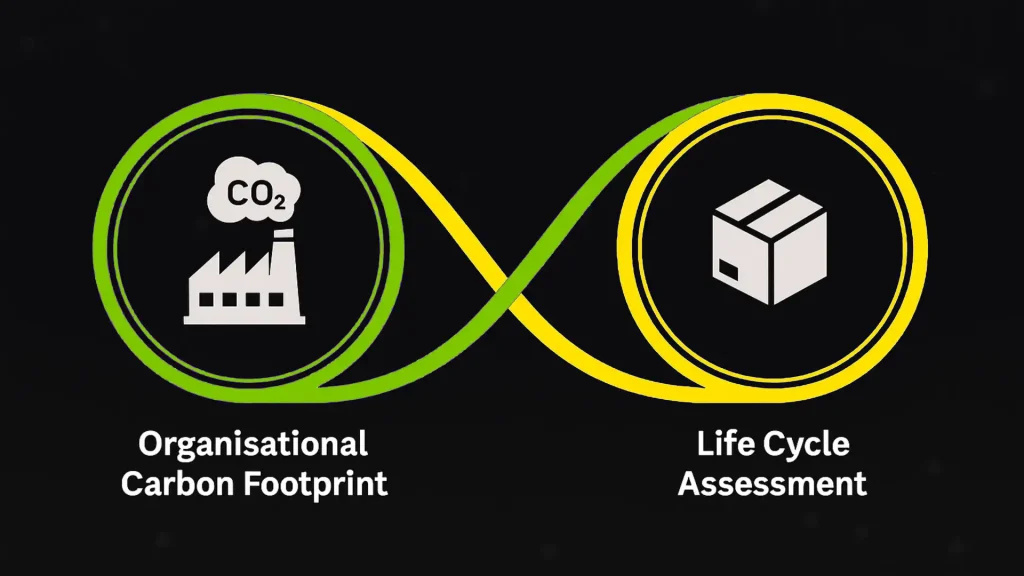
Measuring a carbon footprint and reducing it are not quite the same exercise.
A carbon footprint shows where emissions are coming from, a carbon reduction strategy helps you works out what can realistically be changed, which actions matter most and what should happen first.
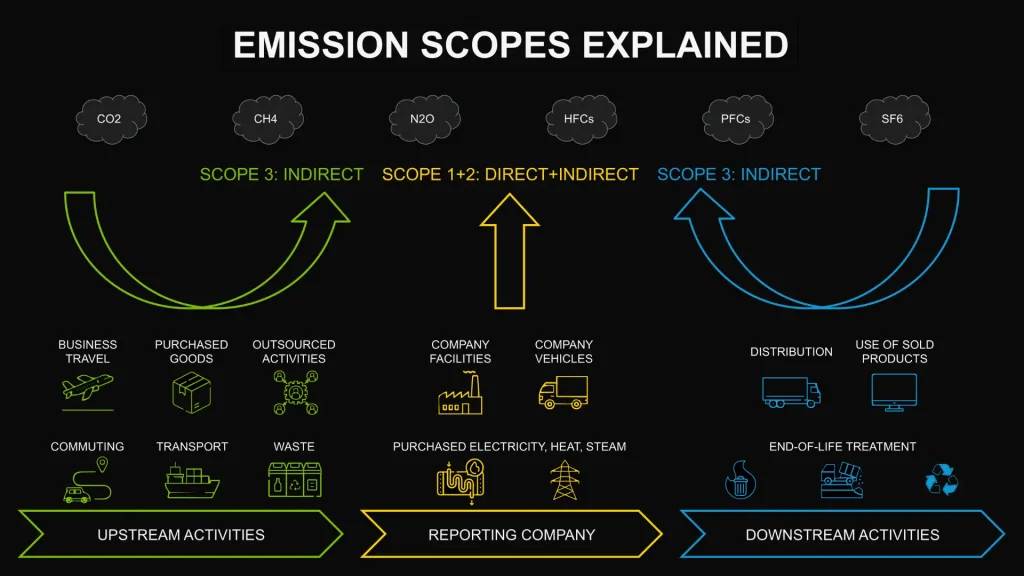
This is where many organisations get stuck. They complete a Scope 1, 2 and 3 inventory, identify their largest emissions sources and perhaps set a target.
Then comes the harder question: Now, what actually needs to change?
A useful carbon reduction strategy connects the footprint to practical decisions. The strategy sets the direction and priorities; the carbon reduction plan turns those priorities into actions, owners and measures of progress.
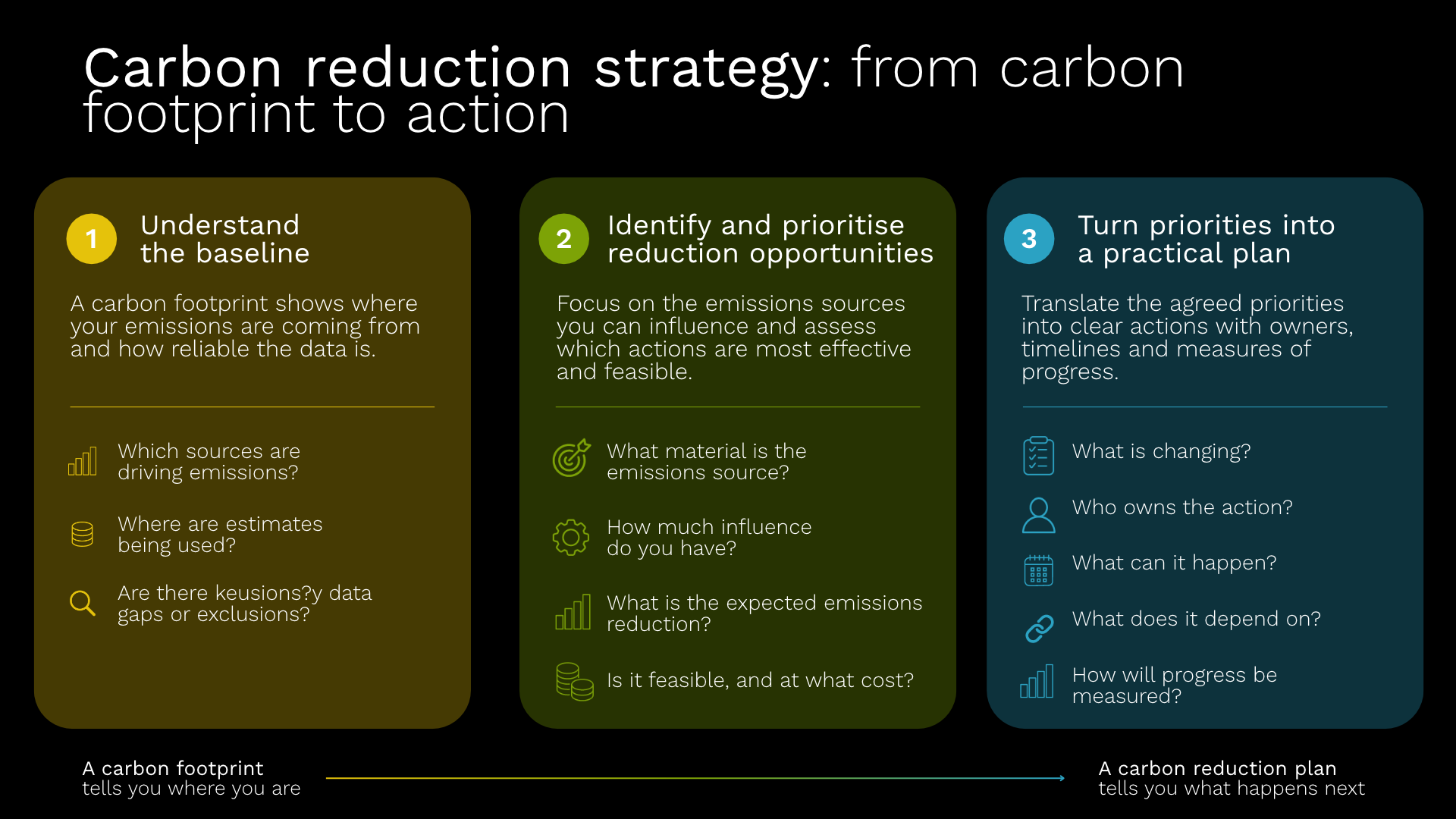
Start by making sure you understand your carbon footprint well enough to use it to guide decisions.
Then identify the emissions sources that are both material and realistically influenceable.
Finally, assess the strongest reduction opportunities based on emissions impact, feasibility, cost and timescale, before turning them into a practical plan.
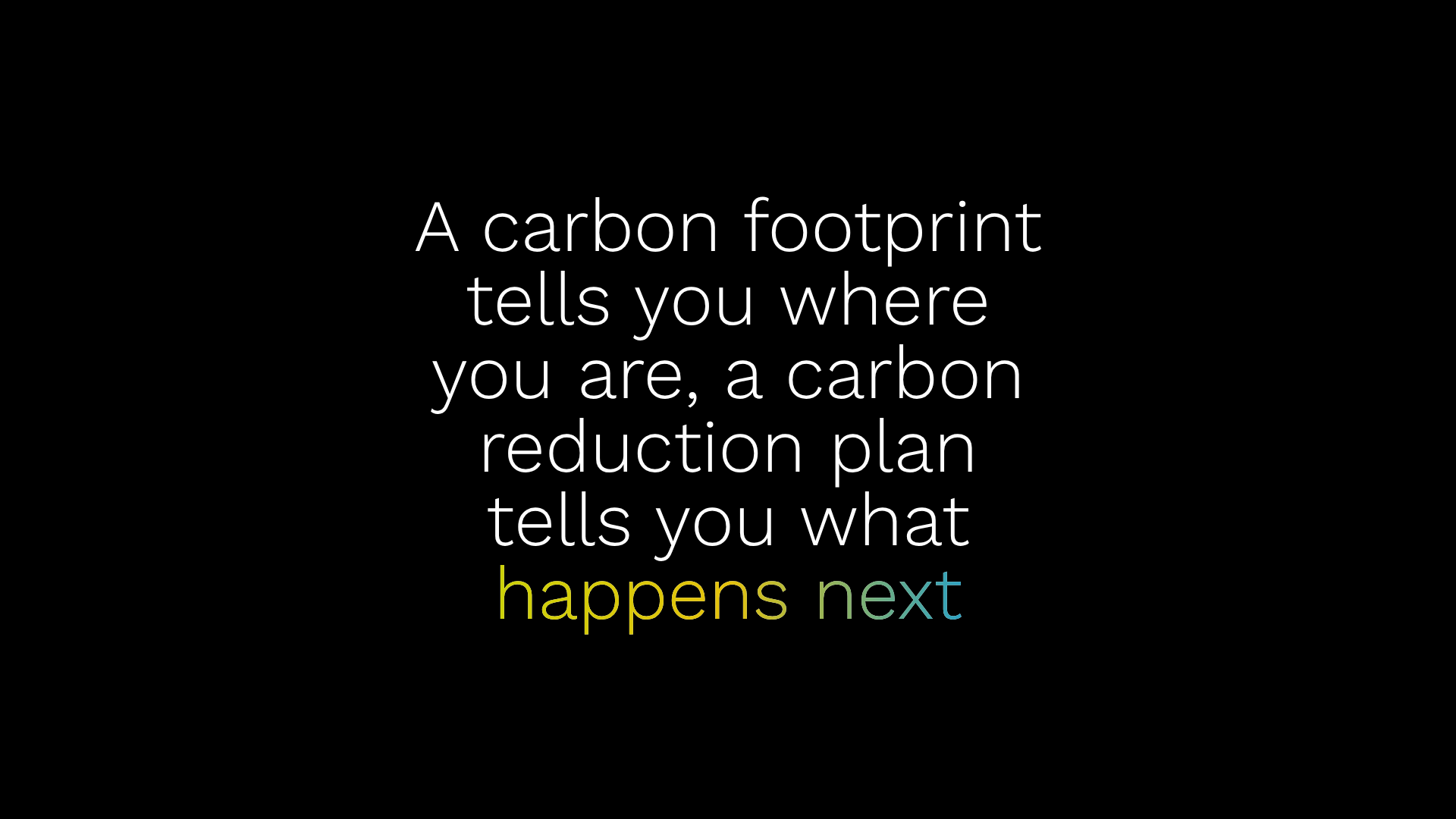
Simply: a carbon footprint tells you where you are, a carbon reduction plan tells you what happens next.
What is a carbon reduction strategy?
A carbon reduction strategy is a structured approach to reducing your organisation’s greenhouse gas emissions over time. It connects three things:
- Where emissions come from;
- Where your organisation can realistically create change;
- And which actions should be prioritised.
The starting point is usually an organisational carbon footprint covering the relevant Scope 1, Scope 2 and Scope 3 emissions.
But completing the footprint is only the beginning. Your footprint may show that purchased materials, energy use or transport account for a significant share of your emissions. The next step is to work out what you can change, what that change would involve and whether you have enough reliable data to make the decision.
Step one: understand the baseline
Before you assess reduction opportunities, you need to understand what sits behind the numbers.
Not every figure needs to be perfect, but your largest emissions sources need to be reliable enough to support the decisions you’re making.
A spend-based Scope 3 estimate, for example, may be useful for identifying a hotspot. It may be less useful for demonstrating whether changing a material or supplier has actually reduced emissions.
Ask yourself whether your current data is good enough for the decision you need to make. You may need more specific data than you used to identify the initial hotspot.
Step two: identify and prioritise reduction opportunities
The biggest emissions source is not automatically the first one to tackle.
Materiality matters, but so does influence.
A large share of emissions may sit in purchased goods and services. That tells you where the emissions are, but not necessarily which intervention will deliver the best result.
Depending on what you buy and how your organisation operates, your options might include changing materials, redesigning a product, engaging suppliers, changing procurement requirements or improving the underlying data first.
Likewise, a smaller Scope 1 source may be easier to influence directly through changes to heating, vehicles, equipment or refrigerants.
Once you’ve identified potential interventions, you need to assess and prioritise them.
Consider factors such as:
- Expected emissions reduction;
- Feasibility;
- Cost;
- Timescale;
- Internal ownership;
- Supplier or customer dependencies.
In practice, some measures can begin immediately. Others need more technical or financial investigation. Some may depend on future investment, supplier change or product redesign.
Use these differences to decide what you can act on now, what needs further investigation and what belongs in your longer-term plan. A carbon reduction strategy should make those priorities clear, rather than treating every opportunity as equally urgent.
Step three: turn priorities into a practical carbon reduction plan
For each priority intervention, you should be able to answer to questions such as:
- What is changing?
- Who owns the action?
- When can it happen?
- What does it depend on?
- How will progress be measured?
For example, identifying energy use as a major source of emissions is only the starting point. Your plan needs to specify what will change, who is responsible, when the change can happen and how you’ll measure its impact.
The plan does not need to predict the future perfectly, but it needs to be clear enough to manage and specific enough to show whether progress is actually being made.
Why carbon reduction strategies go wrong
When everything becomes a priority
A long list of recommendations is not necessarily a strategy. If every action appears equally urgent, it becomes difficult to decide where time, budget and attention should go first.
You need to distinguish between actions that can deliver meaningful reductions now and those that need more investigation, investment or coordination.
Targets are set without a clear pathway
A target can create direction, but you still need to understand which interventions could deliver the reduction, how long they may take and what they depend on.
The key question is what needs to change across your operations, purchasing or supply chain to make the target realistic.
Progress is only checked once a year
An annual carbon footprint is useful for understanding the overall result, but it should not be the only way to know whether individual reduction actions are working.
Between reporting cycles, you can track operational indicators such as energy use, fuel consumption, material quantities, refrigerant top-ups or supplier-specific data. These can give you a much clearer picture of whether actions are progressing as expected, without waiting for the next annual footprint.
From measurement to action
There is no universal list of carbon reduction measures. The right priorities depend on where your emissions sit and how your organisation operates.
Your carbon footprint should help you decide where to focus your effort, rather than simply provide a list of emissions sources. This is why generic recommendations can only go so far. You need to understand which changes are relevant to your organisation and what it will take to put them into practice.
How ARIA can help
A carbon footprint is most useful when it leads to a clearer decision about what happens next. ARIA supports organisations in moving from emissions measurement to practical carbon reduction planning.
That can include reviewing the baseline, identifying the emissions sources that matter most, assessing reduction opportunities and turning priorities into a plan that can be monitored over time.
If you’ve already measured your organisation’s carbon footprint but aren’t sure which actions to take next, Aria can help you work out where to focus and how to turn your findings into a practical plan.
Talk to a sustainability expert
Frequently Asked Questions
Below you’ll find answers to the most frequently asked questions about Scope 1.
Is natural gas Scope 1?
Yes. Where your organisation burns natural gas in equipment it owns or controls, such as a boiler or furnace, the resulting direct emissions are generally Scope 1.
Are company vehicles Scope 1?
Fuel burned by vehicles owned or controlled by the organisation is generally Scope 1.
Are refrigerants Scope 1 emissions?
Refrigerant gases released from equipment within your organisational boundary can be Scope 1 fugitive emissions. This is why maintenance and top-up records can be an important data source.
Can a company have zero Scope 1 emissions?
Potentially, yes. But before declaring zero, check for sources such as refrigerants, backup generators, small combustion equipment and controlled vehicles.